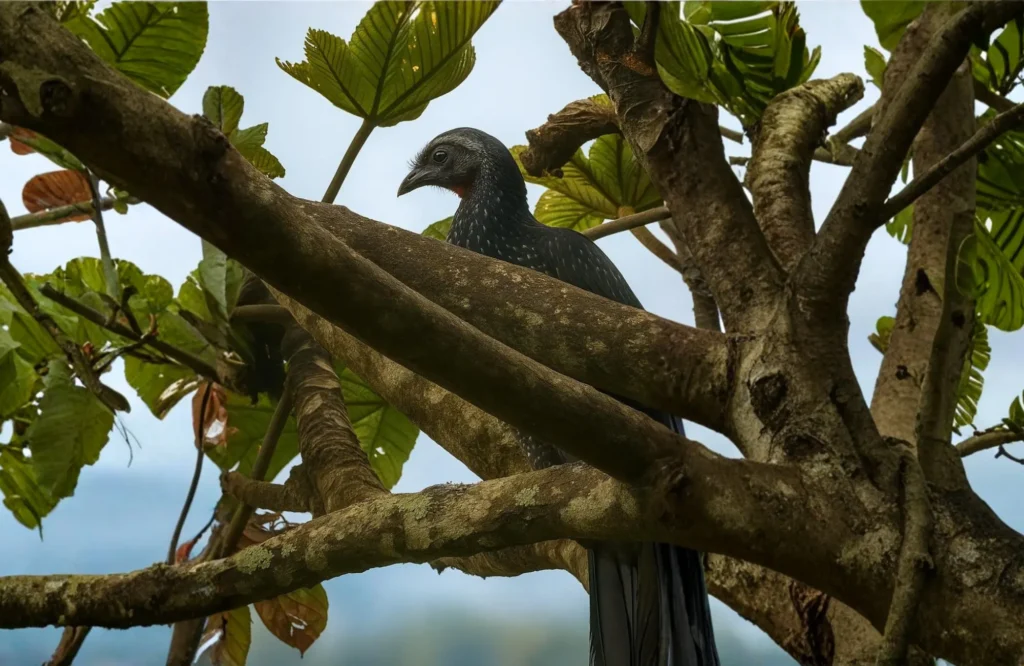

Nestled in the lush Yungas of La Paz, Coroico is one of Bolivia’s richest birdwatching destinations. Its humid forests, rivers, and mountain slopes host more than 450 bird species, nearly 32% of all species recorded in the country.
This extraordinary diversity makes Coroico a birdwatcher’s paradise, where both experts and casual visitors can enjoy an unmatched natural spectacle.
Andean Cock-of-the-Rock (Rupicola peruvianus)
Known locally as the tunqui, this striking bird is Coroico’s most beloved symbol. The male displays a brilliant reddish-orange plumage and a semicircular crest that glows in the misty forest. Its calls echo at dawn and dusk as it performs colorful courtship dances to attract the female.
Where to see it: Cloud forests of Uchumachi, Carmen Pampa, and along the Huarinilla River.
Fun fact: It’s considered the tourism emblem of the municipality.
Mitred Parakeet (Psittacara mitratus)
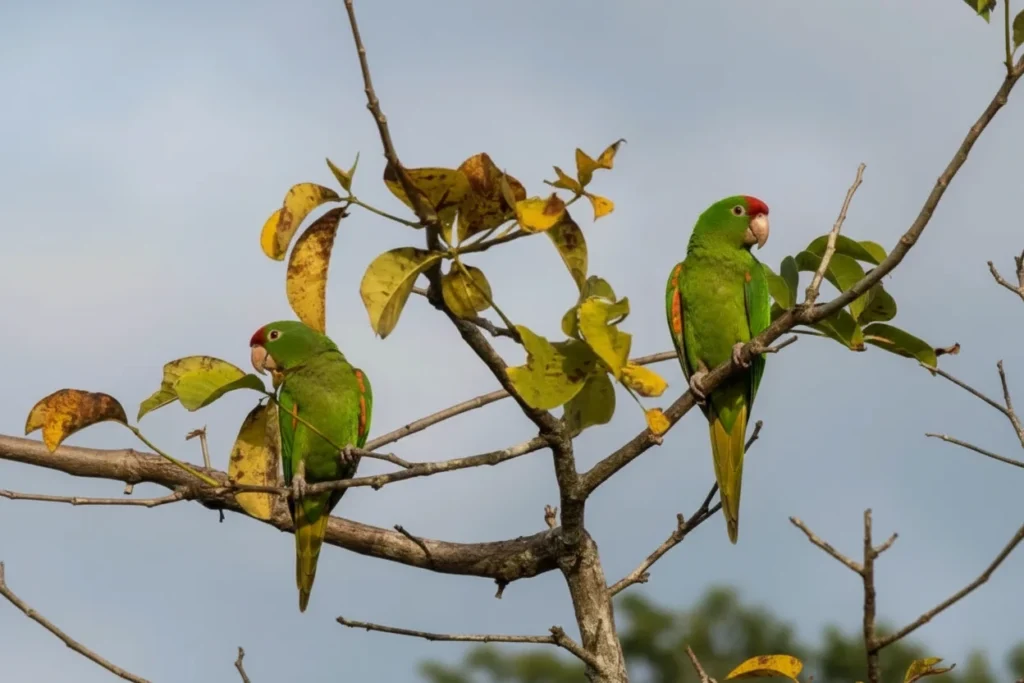
This medium-sized parrot, bright green with a red forehead, is one of Coroico’s most cheerful and abundant species. Flocks fly noisily over the treetops and settle in local fields or gardens.
Where to see it: Around town, in agricultural areas, and on the road to Coripata.
Fun fact: Its presence brings life and movement to the Yungas forests.
Giant Hummingbird (Colibri coruscans)
Also known as the sparkling violetear, this large hummingbird dazzles with its iridescent blue-green feathers and lightning-fast flight — a flash of color among tropical flowers.
Where to see it: In gardens and flowery patios near Carmen Pampa or Chamanica Ecolodge.
Fun fact: The early morning hours are the best time to spot it feeding.
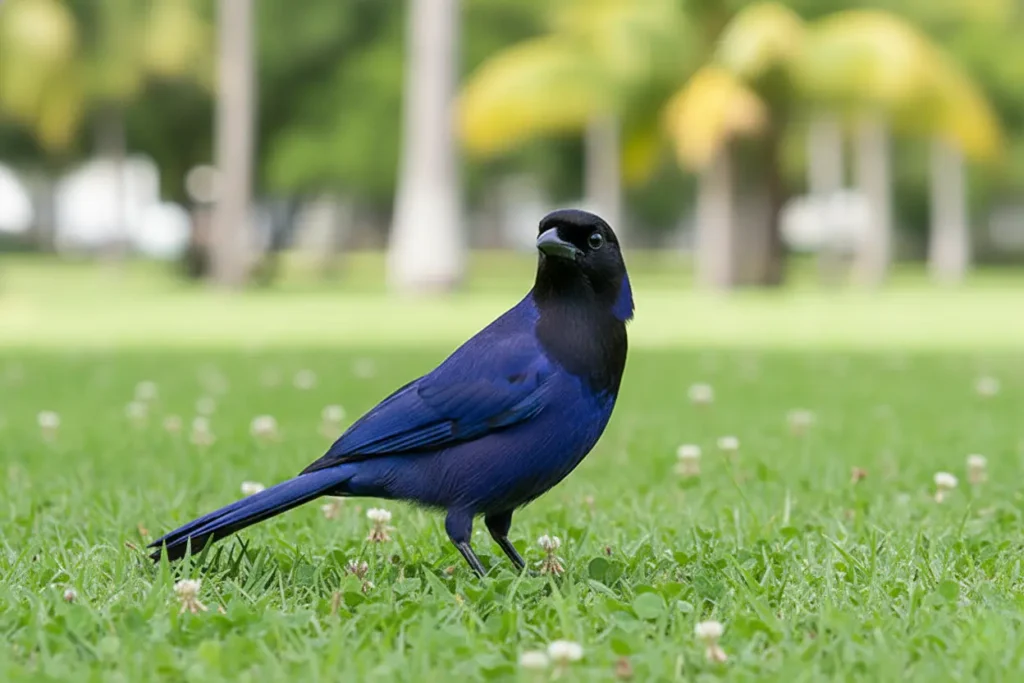
Purple Jay (Cyanocorax cyanomelas)
With its dark plumage and violet sheen, the purple jay is one of Coroico’s most social and intelligent birds. It moves in family groups, searching for fruits and insects, while its loud and melodic calls reveal its presence long before it’s seen.
Where to see it: Charobamba, Yolosita, and the roads leading to Cotapata National Park.
Fun fact: Belongs to the corvid family — birds known for remarkable intelligence and memory.
Rufous-naped Brushfinch (Atlapetes rufinucha)
Endemic to Bolivia, this small bird stands out with its reddish nape and gray head. It thrives along forest edges and shrubby slopes, hopping between low branches and dry leaves.
Where to see it: On the slopes of Uchumachi and trails toward Coripata.
Fun fact: Highly sought after by international birders for its exclusive Bolivian habitat.
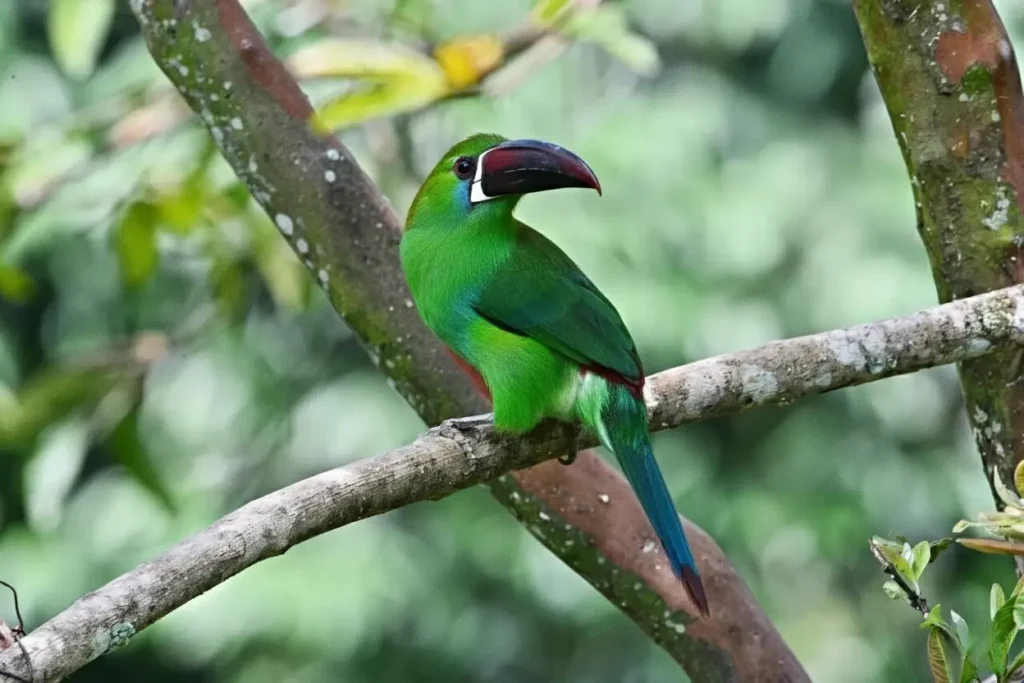
Emerald Toucanet (Aulacorhynchus spp.)
Coroico’s mountain toucan is a living jewel — emerald-green feathers, a multicolored bill, and a sharp call that echoes through the forest. It prefers humid woodlands between 1,500 and 1,800 meters above sea level.
Where to see it: On the hills of Carmen Pampa, in Cotapata Park, and nearby communities.
Fun fact: One of the most photographed birds in the region.
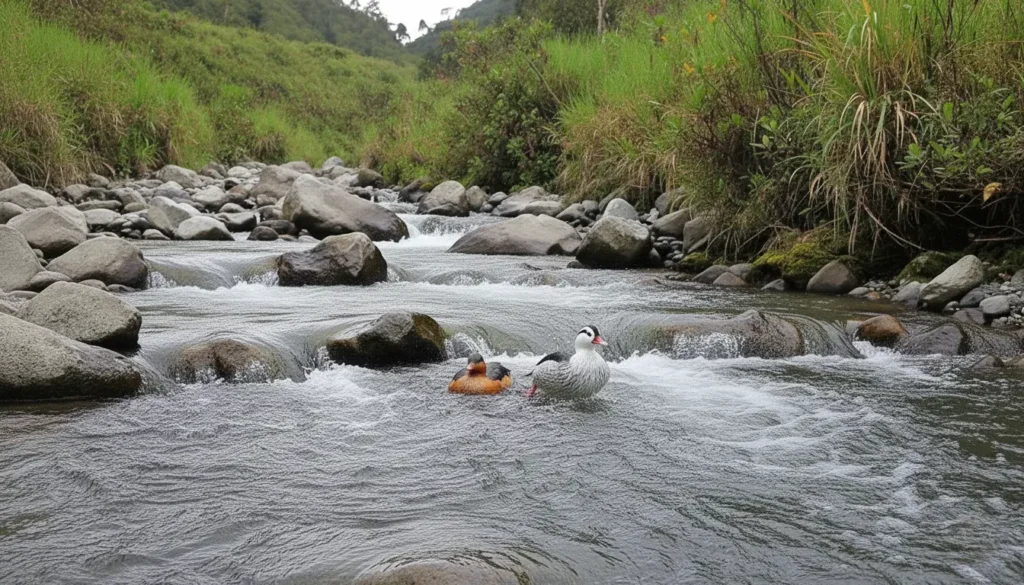
Torrent Duck (Merganetta armata)
This wild duck lives in fast-flowing Andean rivers with crystal-clear waters. It’s known for swimming against the current and resting on rocks — a true symbol of strength and adaptation.
Where to see it: In the Huarinilla River and its tributaries, especially at dawn.
Ecological fact: Its presence indicates clean water and healthy ecosystems.
Other Notable Species
Beyond these highlights, Coroico hosts a dazzling array of tanagers, tiny hummingbirds such as the Bolivian Sunbeam (Aglaeactis pamela, endemic to La Paz), Andean raptors, and nocturnal species like the oilbird, which inhabits humid caves.
Every trail and waterfall reveals new surprises — all you need to do is pause, listen, and look.
Tips for Enjoying Birdwatching
- Go out early — birds are most active between 5:30 and 8:30 a.m.
- Bring binoculars or a zoom camera.
- Walk quietly and patiently — loud noises scare shy species away.
- After rainfall, birds often emerge to feed.
- Always respect their environment — don’t touch or feed them.
Conclusion: Coroico, a Paradise for the Senses
The song of the Andean cock-of-the-rock, the flight of the giant hummingbird, and the curiosity of the purple jay are just part of the natural concert that fills Coroico’s forests.
Birdwatching here means discovering a living world where forest, water, and mountain unite in harmony.
In Coroico, every glance at the sky tells a story of freedom and color.