
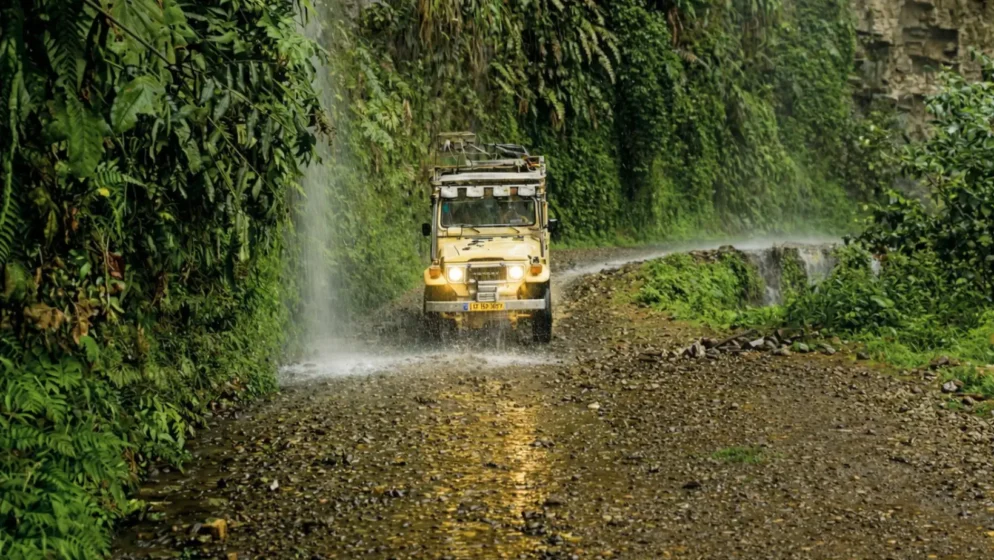
Everyone talks about the abyss. Few talk about everything else.
The Death Road, officially known as the Road to the Yungas, is famous worldwide for its sheer cliffs and extreme past. Yet beyond viral images and sensational stories, there is a quiet reality that few travelers truly understand before riding it.
This road is not crossed only with the body, but with the mind. The experience is shaped by subtle details: unspoken rules, sudden environmental changes, the constant sounds of the jungle, and an inner tension rarely captured in photos. Understanding these elements completely transforms the journey and allows it to be experienced with respect and awareness.
Here is what almost no one tells you about this legendary descent between La Paz and the Yungas.
It’s not the abyss that intimidates the most
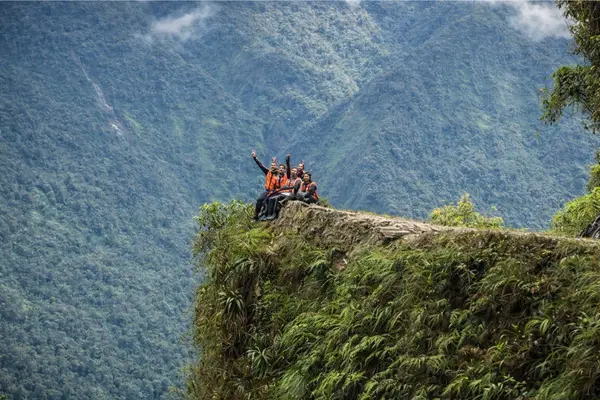
Contrary to what many imagine, fear does not appear when you look down. It comes earlier.
It arrives when the fog suddenly closes in, when the road becomes narrower, and when silence is broken only by the sound of falling water. In many sections, you cannot see the bottom of the cliff. The void is there, but hidden — and the mind fills in what the eyes cannot see.
You ride on the left… and it’s not a minor detail
Almost everywhere in Bolivia, traffic flows on the right. Here, it doesn’t.
On the Death Road, vehicles and cyclists keep to the left, a rule inherited from the time when buses and trucks descended constantly. The reason was simple and brutal: the driver needed to see exactly where the wheels were in relation to the abyss.
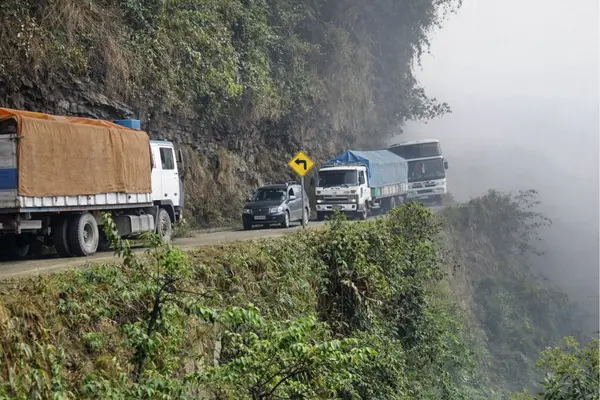
Today, even with minimal traffic, this rule remains in force and is respected by support vehicles and cyclists alike. Ignoring it is not just careless — it is genuinely dangerous.
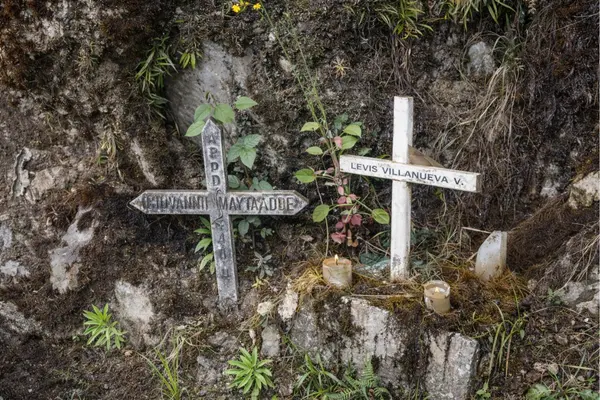
The crosses are not decoration
Along the road, you will see rusted crosses, small plaques, and artificial flowers. They are not there to create atmosphere.
Each one marks the exact place where someone lost their life. Some are old and almost covered in moss; others are more recent. Guides often stop near them, not to scare, but to remind riders of something essential: this road does not forgive overconfidence.
The real enemy is euphoria
After the first few kilometers, many people feel they have “already mastered it.” That is the most dangerous moment.
The route is deceptive. Curves never repeat themselves, the terrain changes constantly, and the jungle reshapes the road day by day. A dry section can turn into mud just meters ahead. A wide curve can suddenly tighten. Here, excessive confidence is more dangerous than fear.
The weather changes without warning
In a single descent, you may experience intense sun, tropical rain, thick fog, and extreme humidity — sometimes all within less than an hour.
The road crosses several ecological zones between La Paz and the Yungas, each with its own climate. That is why even the most experienced guides do not try to conquer the road — they respect it.
Mental fatigue outweighs physical fatigue
Although the entire route is downhill, the mind never rests. Every second demands attention, terrain reading, and constant decision-making.
By the end, many are surprised: the body is not exhausted, but the mind is. It is a deep, distinct fatigue that explains why almost no one wants to return immediately to the city.
The ending is not euphoria — it is calm
Upon reaching the area of Yolosa, near Coroico, something unexpected happens. The body naturally slows down.
The intense green, the warmth, and the jungle create a feeling of protection. There are no loud celebrations. There is silence. As if the environment itself were saying: it’s over now.
What really matters afterward
The real journey begins after the descent.
When the body asks for rest, the mind seeks silence, and nature becomes refuge, the Yungas stop being just the end of the road and become a place to process the experience.
The Death Road is not just a dangerous route. It is an experience that demands respect, attention, and humility. And once crossed, it changes how you understand travel… and rest.
Frequently asked questions (FAQ)
Do you need prior experience to ride the Death Road?
No prior experience is strictly required, but it is essential to go with responsible operators, follow all instructions, and maintain a conscious, respectful attitude throughout the journey.
What is the best time of year to do the descent?
It can be done year-round, although conditions vary. The dry season offers better visibility, while the rainy season intensifies the experience.
Is it recommended to rest in the Yungas after the ride?
Yes. The contrast between the tension of the descent and the calm of the jungle makes post-ride rest an essential part of the experience.