
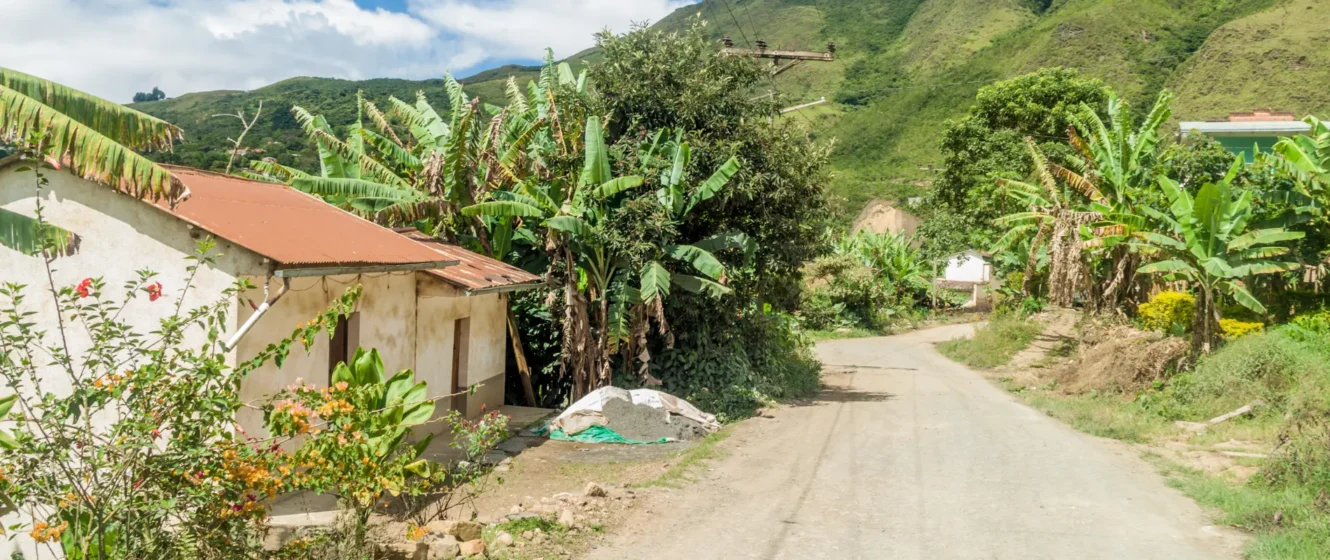
In the green mountains of the Yungas, where mist embraces the coffee plantations and life beats with an African rhythm, lies a unique cultural experience in Bolivia: the Afro-Bolivian Tourism Route (RTAB). From Coroico—one of the most visited destinations in the region—a path opens toward communities where history, memory, and music remain alive.
Here, the Afro-Bolivian Royal House, the Saya dance, and traditional gastronomy reveal an identity that has resisted for centuries. This route offers an authentic immersion into the Afro heritage of Bolivia, connecting culture, nature, and community hospitality. For travelers seeking cultural tourism in Coroico, this journey becomes an invitation to discover an extraordinary story still being written in Tocaña, Mururata, and Nogalani.

The essence of the Afro-Bolivian Route: living history in Mururata
The heritage heart of the RTAB is found in Mururata, home of the Afro-Bolivian Royal House. This is where the royal lineage tracing back to Prince Uchicho began—recognized as king by enslaved Africans in the 19th century. His coronation in 1832 marked a historic act of dignity and cultural resistance. Today, His Majesty Julio I Pinedo and Queen Angélica Larrea preserve this legacy with a simple, authentic life deeply connected to their community. Visiting Mururata means encountering a living heritage unique in the Americas.
Tocaña: the power of Saya and community culture
Tocaña is known as the “Afro heartbeat of the Yungas.” Here, Saya—the emblematic dance of African heritage—continues to guide the cultural life of the village. Visitors can learn the deeper meaning of its rhythms, participate in community workshops, and enjoy traditional dishes like mondongo prepared by local families. Tocaña is the experiential core of the route, where hospitality and closeness to the community transform every visit into a meaningful cultural exchange.
Nogalani and the Interpretation Center: the historical link with coca and coffee
The Interpretation Center of the Coca Leaf, High-Altitude Coffee, and Afro-Bolivian Culture in Nogalani is a key piece of the circuit. Although currently underused, this space was designed to explain the historical connection between coca plantations, coffee production, and the Afro-descendant presence in the Yungas. Revitalizing this center would allow the route to begin with solid educational context, preparing visitors to understand the history they will encounter in Tocaña and Mururata.
Coroico as the starting point: nature, culture, and ideal logistics
As the gateway to the Yungas, Coroico offers the perfect balance of nature, culture, and accessibility. Only three hours from La Paz, it is the ideal base for cultural tours, historical trekking routes, or agro-tourism activities. Whether exploring the Uchumachi hill, visiting coffee farms, or joining celebrations like the National Day of the Afro-Bolivian People and Culture (September 23), Coroico functions as the logistical and emotional hub of the entire route.
Frequently Asked Questions (FAQ)
What is the best time to explore the Afro-Bolivian Tourism Route?
September is a key month thanks to the Saya Festival and the National Day of the Afro-Bolivian People, offering many cultural activities in the region.
Is this experience suitable for families?
Absolutely. The music, living history, and community hospitality make it an enriching activity for children and adults alike.
Can Tocaña, Mururata, and Nogalani be visited on the same trip?
Yes. From Coroico, it is possible to organize a 1–2 day circuit that includes the main points of the route.