
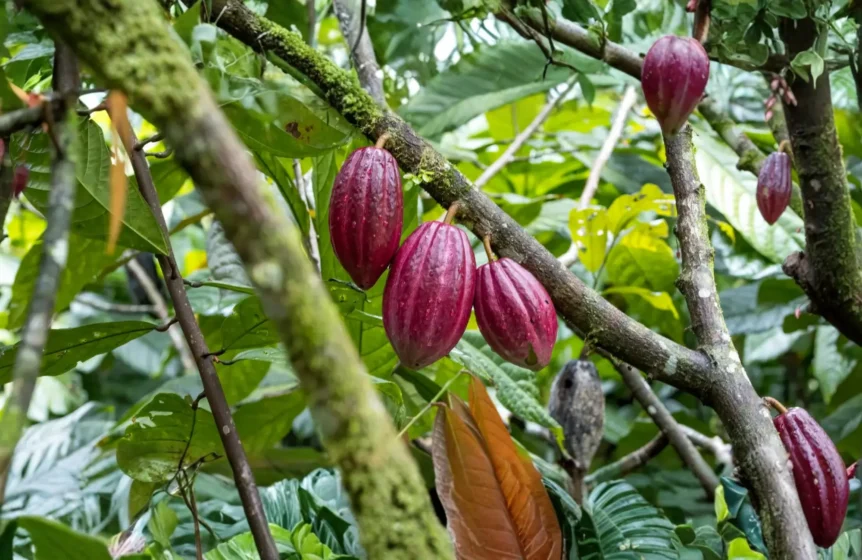
The first time a farmer in Coroico told me, while opening a reddish pod, “this is high‑altitude cacao, that’s why it’s so rare and so delicious,” I understood that I was witnessing a story worth telling. In this article you’ll discover how this uncommon cacao from Los Yungas is born, how it’s produced in Bolivia’s tropical rainforest, and why its rarity attracts curious travelers who visit ecological hotels in Coroico such as Chamanica Ecolodge.
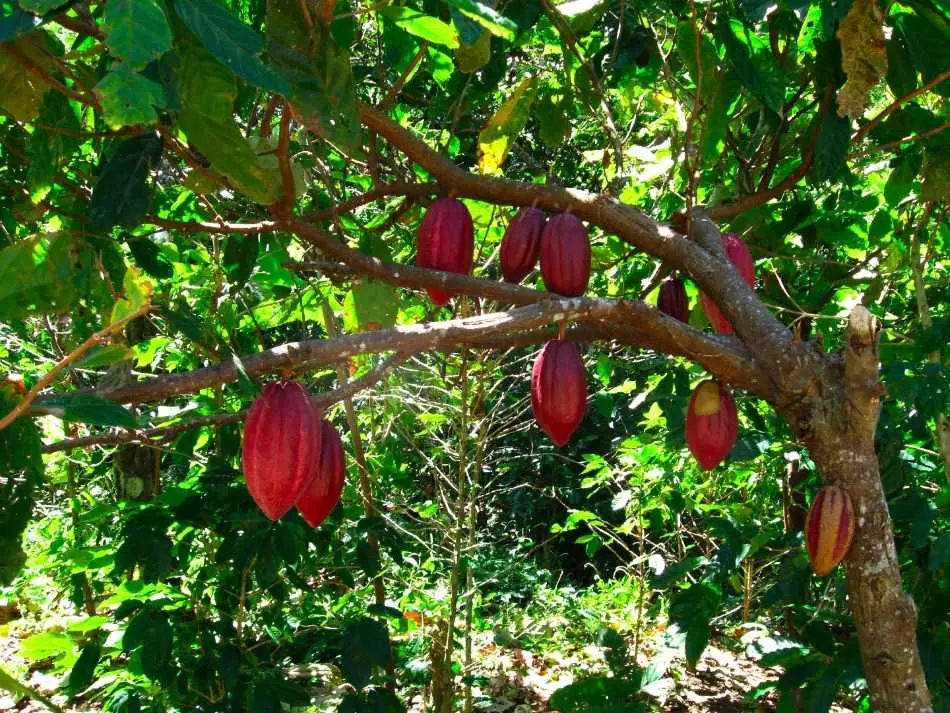
The Origin of High‑Altitude Cacao in Los Yungas
Unlike the traditional cacao‑growing zones—of which there are many in Los Yungas, usually located in low and humid lands—Coroico cultivates an unusual cacao due to its elevation, nestled among mountains covered in lush rainforest. This makes it an exceptional product within Bolivia’s tropical forest.
Local farmers say that this altitude changes the aroma, natural acidity, and intensity of the bean, giving it a profile not found in other cacao regions of the country or the world. This is why producers proudly affirm that Coroico’s cacao is unique and unrepeatable.
How a Rare and Exquisite Cacao Is Grown
Mountain Microclimates that Shape the Flavor
The cacao of Los Yungas grows under natural shade, surrounded by fruit trees and native species that preserve the rainforest’s humidity. The cool nights and warm days in Coroico slow the development of the fruit, allowing its flavors to concentrate in a special way.
Hand‑Selected and Carefully Cultivated
Because high‑altitude cacao is not abundant, each plant receives almost artisanal care. Pruning, clearing weeds, and monitoring the pods are done manually. Local producers often say that “each high‑altitude pod is a small masterpiece.”
Fermentation and Drying Adapted to the Altitude
After harvesting, the beans go through fermentation in small wooden boxes and then dry slowly in the sun. This controlled drying process is essential to preserve the aromatic character that distinguishes Coroico’s high‑altitude cacao.
The Economic Value of a Scarce Cacao
Since it is not a mass crop, its rarity gives this cacao a higher value in gourmet markets. Some artisanal chocolatiers specifically look for beans from Coroico due to their aromatic profile.
Cacao Tourism in Coroico
High‑Altitude Cacao Trails
Visits to cacao farms allow tourists to discover a crop not found in most regions. Seeing cacao grow on mountain slopes surprises even seasoned travelers accustomed to traditional plantations.
Why Does High‑Altitude Cacao Amaze Visitors?
Its rarity is part of the charm: it’s unusual to find cacao growing above one thousand meters, and even more unusual to find one with such a strong aromatic identity. Travelers and experts agree that its origin in Bolivia’s tropical rainforest, combined with the specific conditions of Los Yungas, make it an extraordinary cacao.
In Summary
Exploring high‑altitude cacao in Coroico means discovering an uncommon crop deeply connected to the rainforest, grown by families who see it as a local treasure and proudly share its unique flavor.
Frequently Asked Questions (FAQ)
Why is Coroico’s cacao considered rare?
Because it grows at high altitude—something unusual for this crop—which makes it scarce and highly valued.
Is its flavor different from other types of cacao?
Yes. Producers say it has a deeper aroma and more complex notes due to the mountain microclimates in Los Yungas.
If you’re planning to visit Coroico and want accommodation or personalized information to explore beautiful places and meet local producers, Chamanica Ecolodge will gladly guide you.